
From the Classroom
Why the Element of Surprise Matters in Simulations (and Why Teachers Shouldn't Spoil Future Events)
"Mrs. Zema, I can't believe Drake actually attacked! We thought maybe he'd just be a threat, but then he really came!"
This excited exclamation came from Emma after our St. Augustine simulation's most dramatic turn. My fourth graders had spent a week reading newspaper warnings about Sir Francis Drake raiding Spanish cities in the Caribbean, debating whether to prepare defenses or focus on other colony needs—and then the event card revealed the attack was happening RIGHT NOW.
The surprise transformed their decision-making from abstract planning into urgent response. They weren't just playing a game—they were experiencing what colonial leaders felt when threats became reality.
But here's what I almost did wrong: I almost told them Drake was coming.

The Power of Themed Learning—Why Seasonal Content Works When Students Are Distracted
Themed learning doesn't compete with holiday excitement—it harnesses it. Learn why choosing seasonally appropriate content makes engagement easier, not harder.
When Gaming Your History Simulations Isn't Actually Gaming
"Mrs. Zema, I figured out the pattern! You always make the morale go up when we help people, so let's just always pick the helping choices." This confident declaration came from Alex during our St. Augustine simulation. He was convinced he'd cracked the code for guaranteed success. He was about to learn that historical leadership is far more complicated than finding the right cheat code.
Teaching Students to Navigate Complex Decisions in History
"But Mrs. Zema, what's the right answer?" This question comes up constantly when my fourth graders are deep in historical simulations. They want me to tell them which choice is correct after debating whether to strengthen defenses or feed hungry families. Here's what I've learned: the most powerful historical thinking happens when students navigate decisions with no clear "right" answer.
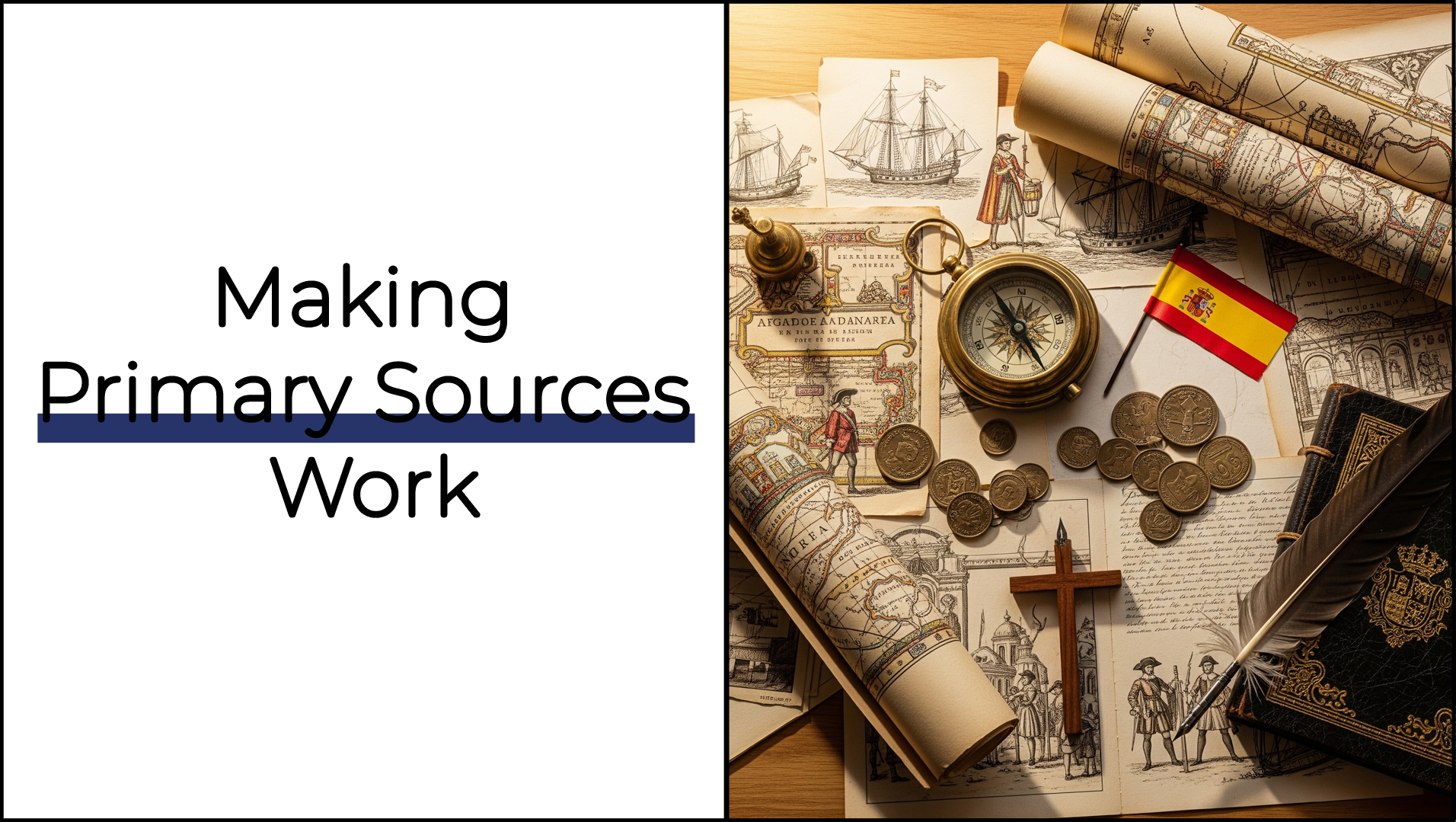
Making Primary Sources Work with Elementary Students
"I can't read this. It's too hard." How many times have you heard that when introducing primary sources to elementary students? I used to think historical documents were only for middle and high school—until I discovered how to make them accessible and engaging for fourth graders. Here's my proven 3-step process that works.